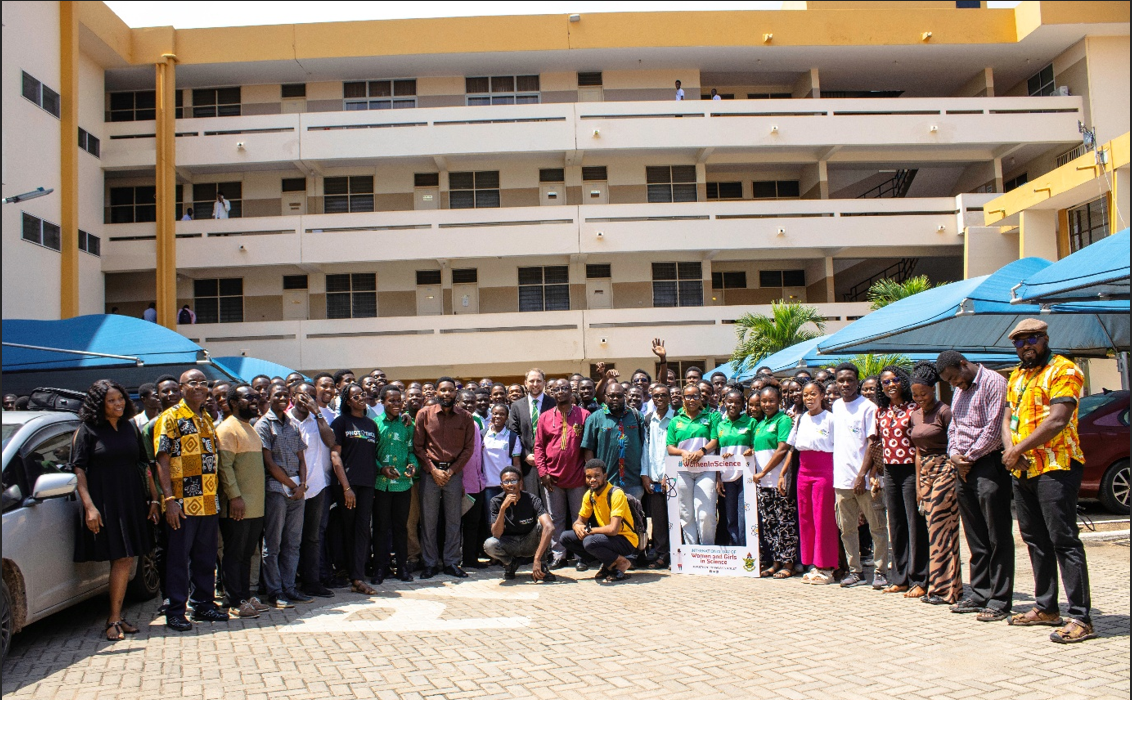
The Ghana Photonics and Optics Laboratory (GPOL) at the Department of Physics, Kwame Nkrumah University of Science and Technology (KNUST), hosted Dr Fabian Ruf, an Integrated Optics & Photonics Designer in the Corporate Research and Technology Department at ZEISS in Germany, for a departmental colloquium lecture focused on photonic integrated circuits (PICs) and careers in integrated photonics.
Dr Ruf’s visit formed part of an outreach collaboration between GPOL and the KNUST Photonics Student Chapter (KPSC), supported by his engagement as an Optica Ambassador. The session was organized to expose students to emerging areas in optics and photonics, and to highlight the range of career pathways available to physics graduates in industry, particularly in PIC design and development.
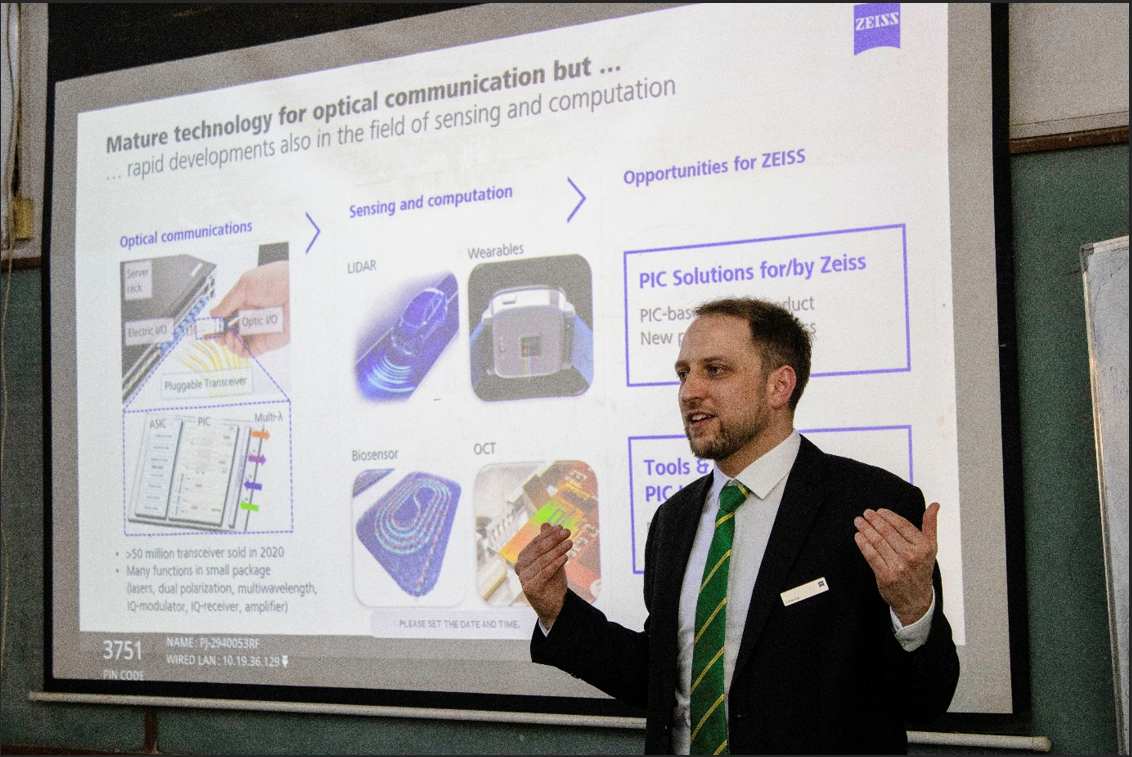
In his lecture, Dr Ruf explained the fundamentals of photonic integrated circuits and how they help to miniaturize large optical systems leveraging the existing computer chip fabrication infrastructure. He highlighted the importance of PICs for applications such as telecommunications and data communication, improving energy efficiency and scalability while supporting the growing demands of artificial intelligence and big data.
Beyond data communication, he provided an overview over various other applications such as LiDAR for light-based detection of the distance and velocity of cars and other objects, or miniaturized optical sensor and lasers which can be integrated into wearable devices such as smartwatches.
He highlighted the potential of miniaturization in medical technology and focused his presentation in particular on optical coherence tomography (OCT) systems used in ophthalmology. According to Dr. Ruf, the research team at ZEISS, where he works as a PIC designer, is developing an OCT system based on photonic integrated circuits to make it more mobile and accessible, with the aim of making these systems more widely available and easier to use. “This could potentially reduce costs and increase accessibility for eye disease diagnosis,” he said.
The lecture ended with an engaging question-and-answer session, during which students from the Department of Physics and members of the KNUST Photonics Student Chapter interacted with Dr Ruf to gain deeper insight into research pathways and industry roles in photonics.